Badgr Pricing vs Badges Ninja (2026): Free vs Paid
Badgr vs Badges Ninja (2026): pricing, the visual designer, API and recipient portal — and why 1,200 free credentials a year with no feature gates wins.
 By Nacho Coll
 Nacho founded Badges Ninja to make issuing verifiable digital credentials as simple as a single API call — Open Badge v2.0 badges and certificates, minted, hosted, and verifiable without standing up your own issuer infrastructure.
Choosing the right digital credentialing platform can make or break your badge program. If you’re evaluating Badgr and looking for alternatives, you’ve likely hit some limitations around design flexibility, modern APIs, or cost scaling. Both Badgr and Badges Ninja support Open Badge v2.0 standards, but they take fundamentally different approaches to issuer and recipient experience.
⚡ Start free — no card, no sales call. Badges Ninja issues 1,200 verifiable credentials a year on the free plan, with the full visual designer and Open Badge v2.0. Create your free account →
This honest comparison breaks down the key differences between these two platforms, helping you make an informed decision based on your specific needs, budget, and technical requirements.
Badgr $50/mo vs Badges Ninja $0-29/mo: Full Feature Comparison Table
| Dimension | Badgr | Badges Ninja |
|---|---|---|
| Pricing | Free tier + paid plans from ~$50/month | Free plan ($0), Starter ($9/mo), Pro ($29/mo) |
| Visual designer | Basic upload + metadata, no built-in designer | 80+ shapes, 8 palettes, 50 icons, 11 fonts |
| REST API | OAuth 2.0, bulk endpoints | API keys + JWT, OpenAPI docs |
| Recipient portal | Backpack (account required) | Magic-link sign-in, no password |
| Migration path | N/A | Open Badge ID fallback + URL redirects |
Badgr has been a pioneer in the Open Badges ecosystem since 2013, with strong adoption in K-12 education, higher education, and corporate training. It’s built around the concept of “pathways” and emphasizes recipient portfolio management through its backpack interface.
Badges Ninja launched as a modern alternative focused on simplicity, visual design, and developer experience. It prioritizes fast badge creation, streamlined recipient flows, and clean APIs for integration.
Both platforms generate fully compliant Open Badge v2.0 credentials that work with any spec-compliant verifier or backpack system, ensuring your badges remain portable regardless of which platform you choose.
Badge Design and Creation
This is where the platforms diverge most significantly.
Badgr’s Design Approach
Badgr provides basic badge creation tools with limited visual customization. You upload a badge image (typically created in external tools like Photoshop or Canva), add metadata, and define criteria. The process is straightforward but requires design skills or external resources to create compelling badge visuals.
The platform focuses more on badge organization through “badge classes” and issuer management than on visual design tools.
Badges Ninja’s Visual Designer
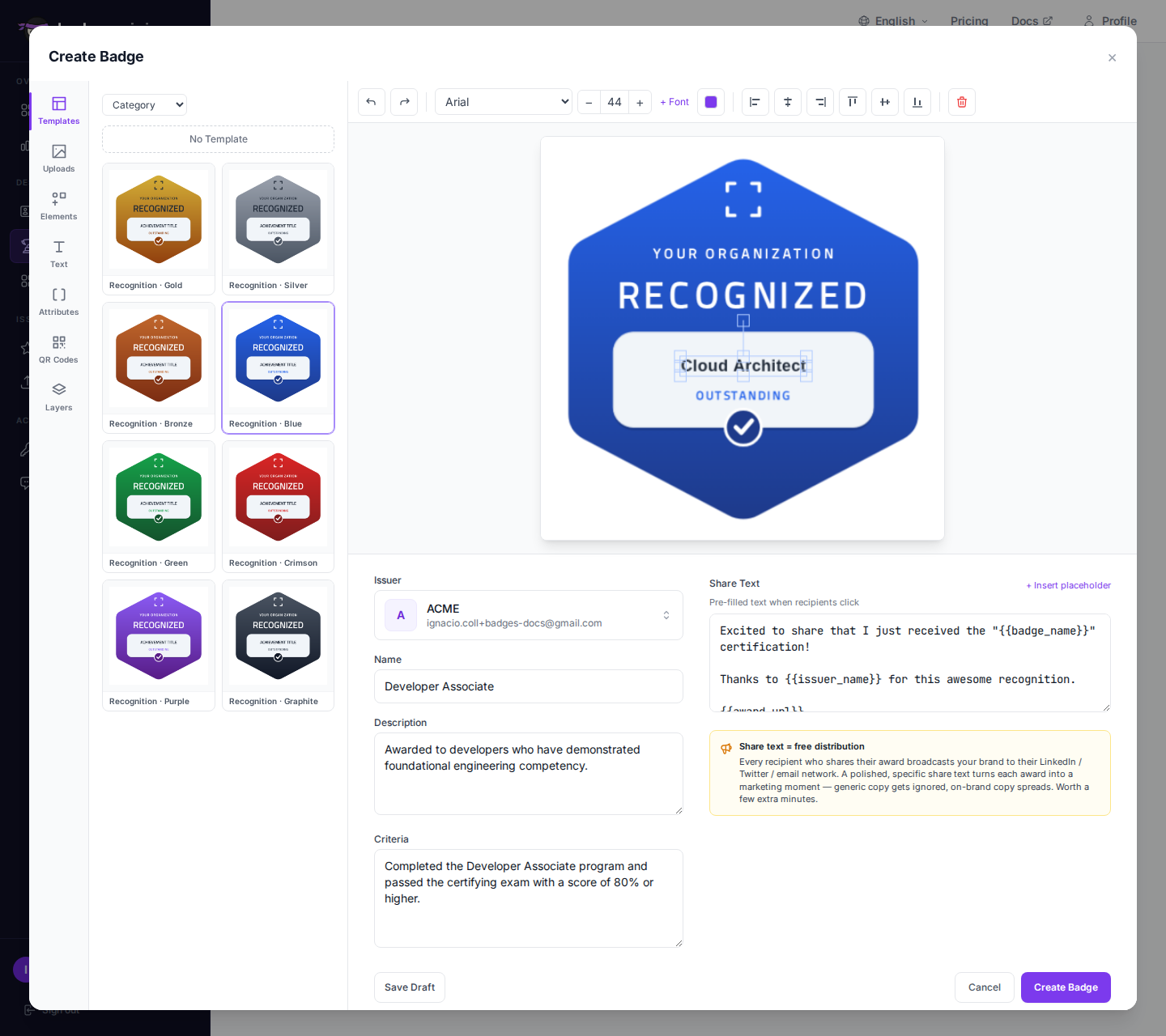
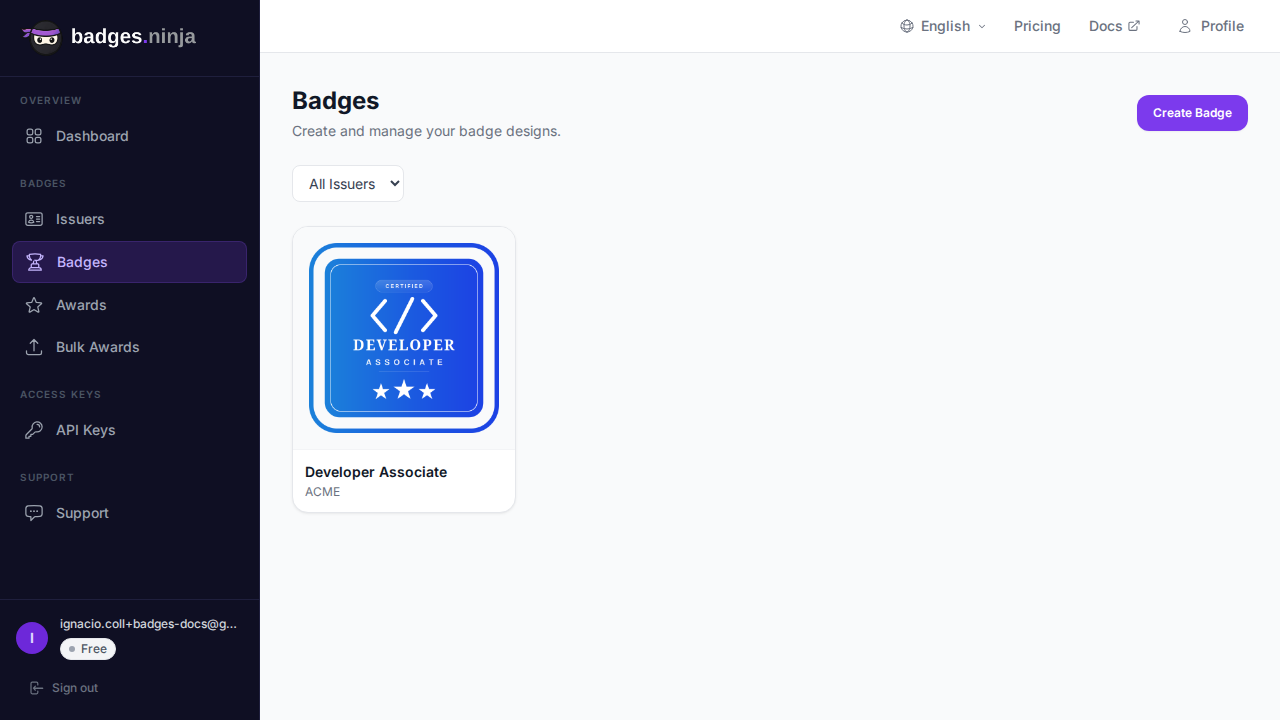
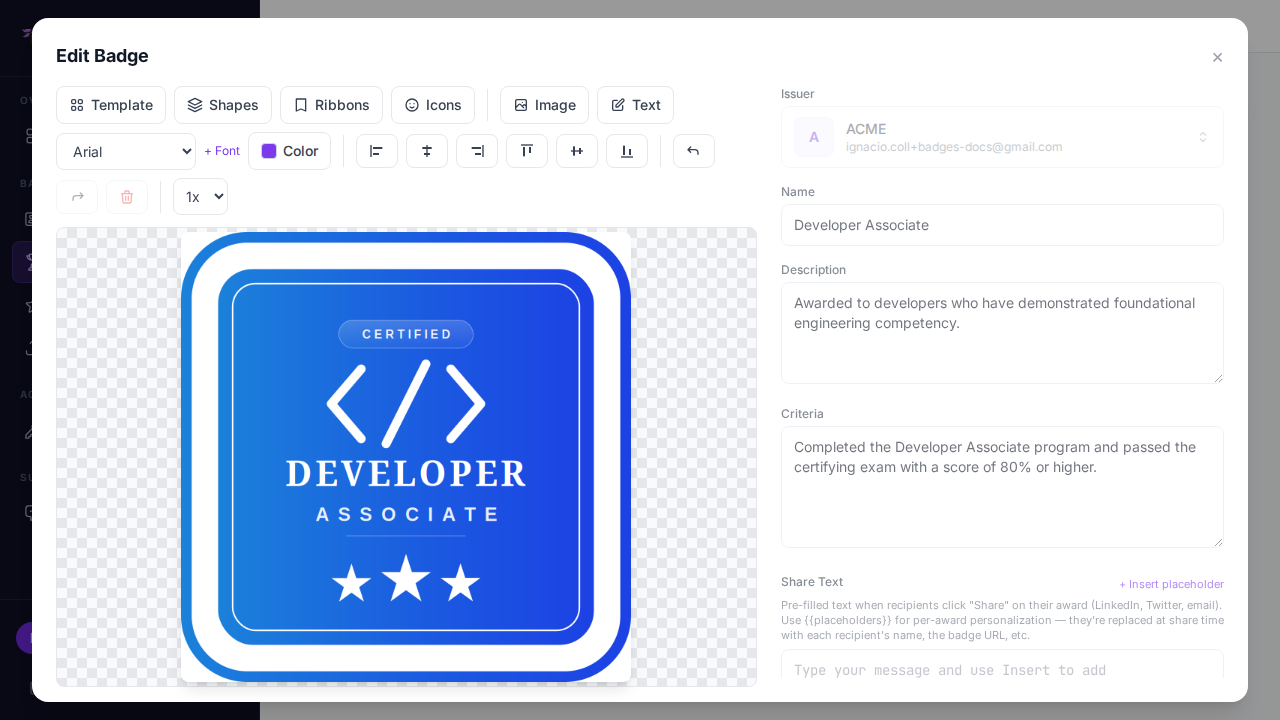
Badges Ninja includes a comprehensive visual designer with 80+ shape templates, 8 color palettes, 50 icons, and 11 fonts (plus custom font upload). The snap-to-grid alignment system and undo/redo functionality make it easy to create professional-looking badges without external design tools.
For organizations issuing multiple badge types, this integrated designer significantly reduces creation time and ensures visual consistency across your credential program.
Recipient Experience and Verification
The recipient journey differs substantially between platforms.
Badgr’s Recipient Flow
Badgr requires recipients to create accounts and accept badges through their backpack system. While this creates a centralized portfolio experience, it adds friction to the claiming process. Recipients get a comprehensive dashboard showing all their earned badges, pathways, and sharing options.
Verification happens through Badgr’s interface, requiring users to navigate to the platform to validate credentials.
Badges Ninja’s Streamlined Approach
Badges Ninja uses magic-link sign-in at badges.ninja/me — no passwords, just email-based authentication. Recipients can collect all their badges in one place and create public profiles at badges.ninja/u/{handle}.
Each credential gets a unique verification page that works independently, plus a QR code for mobile verification. The verification process is public and doesn’t require signup, making it easier for employers or validators to check credentials quickly.
API and Integration Capabilities
For organizations needing to integrate badge issuance into existing systems, API quality matters significantly.
Badgr’s API
Badgr provides a REST API that covers core badge management and issuance functions. The API follows OAuth 2.0 authentication and supports bulk operations. However, the documentation can be dense, and some developers report challenges with rate limiting and response consistency.
Badges Ninja’s Modern API
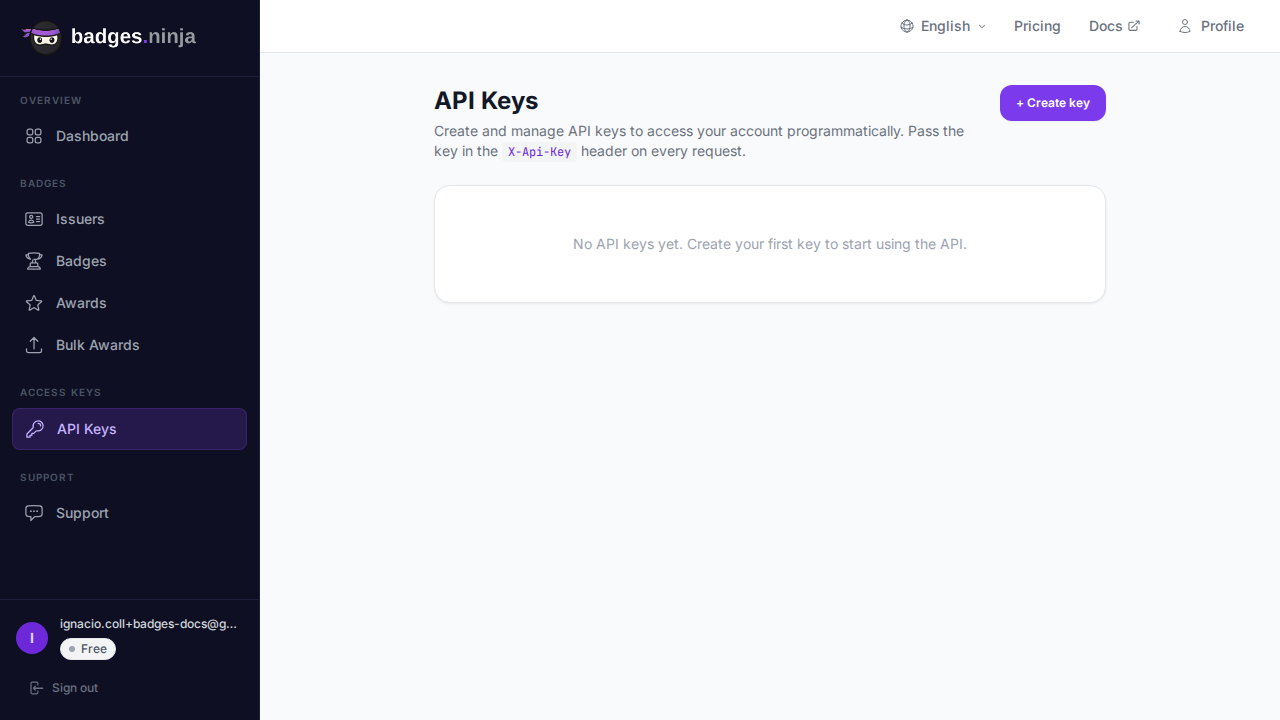
Badges Ninja offers a clean REST API with comprehensive OpenAPI documentation at badges.ninja/docs/api. Authentication supports both API keys for backend services and JWT tokens for frontend applications.
Here’s a quick example of issuing a badge via the API:
const response = await fetch('https://api.badges.ninja/awards', {
  method: 'POST',
  headers: {
    'X-Api-Key': 'bws_your32hexkeyhere',
    'Content-Type': 'application/json'
  },
  body: JSON.stringify({
    badgeId: 'your-badge-id',
    recipient: {
      name: 'Jane Smith',
      email: 'recipient@example.com'
    },
    issuedOn: '2024-01-15'
  })
});
The API includes bulk credential endpoints for CSV uploads with pause/resume functionality, making it easier to manage large-scale issuance campaigns.
Full endpoint and auth details are in the API Authentication docs.
Pricing and Cost Structure
Cost models reveal different target audiences and scaling philosophies.
Badgr Pricing
Badgr operates on a freemium model with paid tiers based on features and volume. The free tier supports basic badge issuance with Badgr branding. Paid plans start around $50/month for small organizations and scale based on features like custom branding, advanced analytics, and API access.
Enterprise pricing varies significantly based on volume and customization requirements, often requiring sales discussions for accurate quotes.
Badges Ninja Pricing
Badges Ninja offers transparent pricing at badges.ninja/pricing:
- Free Plan ($0): For individuals getting started, includes full visual designer and public verification
- Starter Plan ($9/month): For teams and training providers issuing regularly
- Pro Plan ($29/month): For organizations issuing at scale
All plans include the complete feature set — visual designer, API access, public verification, Open Badge v2.0 compliance, and PDF certificates. The pricing scales with usage rather than features, making it more predictable for budget planning.
Open Badge Standards Compliance
Both platforms generate fully compliant Open Badge v2.0 credentials with proper JSON-LD structure and cryptographic verification. This ensures interoperability with other Open Badge systems and future-proofs your credentials.
Badges Ninja provides direct access to OpenBadge JSON at api.badges.ninja/certify-badge/award/{guid} and supports verification through any spec-compliant validator. The platform also includes rich Open Graph tags for better link previews when badges are shared on social media.
Multi-language and Global Support
For organizations operating internationally, language support becomes crucial.
Badgr supports English primarily, with limited localization options for recipient-facing interfaces.
Badges Ninja automatically displays verification pages in 41 languages based on the recipient’s browser locale, making it more accessible for global credential programs.
Bulk Operations and Workflow Management
When issuing credentials to large groups, workflow efficiency matters.
Badgr’s Bulk Features
Badgr supports bulk badge issuance through CSV uploads and API endpoints. The process works well for straightforward batch operations but can become complex when dealing with errors or partial failures.
Badges Ninja’s Bulk Credentials
Badges Ninja includes sophisticated bulk credential functionality with CSV upload, pause/resume capabilities, and detailed error reporting. For a walkthrough of the CSV import format and pause/resume flow, see our Bulk Credentials guide, which shows how to handle large-scale issuance with rollback options and progress tracking.
Migration and Data Portability
If you’re currently using Badgr and considering alternatives, migration paths matter.
Since both platforms support Open Badge v2.0 standards, your existing badges remain valid and verifiable regardless of platform. However, the migration process involves:
- Exporting badge class definitions and recipient data from Badgr
- Recreating badge designs (opportunity to improve visuals with Badges Ninja’s designer)
- Re-issuing badges to recipients with new verification URLs
- Updating any integrations or embeds
The technical migration is straightforward, but plan for communication with recipients about the new verification process.
Integration Ecosystem
Badgr has established partnerships with major LMS platforms (Canvas, Moodle, Blackboard) and integrates well with educational technology stacks. This makes it attractive for institutions already invested in these ecosystems.
Badges Ninja focuses on API-first integration and works well with custom applications, modern web stacks, and automation tools. The clean API makes it easier to integrate with marketing automation, CRM systems, and custom training platforms.
Support and Documentation
Badgr provides support through help documentation, community forums, and paid support tiers. The platform has extensive community knowledge due to its longer market presence.
Badges Ninja offers comprehensive documentation at badges.ninja/docs, including API references, integration guides, and troubleshooting resources. The smaller user base means more direct support access but less community-generated content.
Use Case Recommendations
Choose Badgr if you:
- Work in K-12 or higher education with existing LMS integrations
- Need complex pathway and progression management
- Prefer recipient portfolio/backpack functionality
- Have design resources for badge creation
- Require extensive community support and documentation
Choose Badges Ninja if you:
- Want fast badge design without external tools
- Need modern APIs for custom integrations
- Prefer transparent, predictable pricing
- Issue credentials to global audiences
- Value recipient experience simplicity
- Want public verification without signup requirements
The Bottom Line
Both platforms deliver Open Badge v2.0 compliant credentials, but they serve different organizational needs and philosophies. Badgr excels in educational environments with complex learning pathways, while Badges Ninja prioritizes design flexibility, modern development practices, and streamlined user experience.
Your choice ultimately depends on whether you prioritize established ecosystem integration (Badgr) or modern design and development experience (Badges Ninja). Consider running a pilot program with both platforms to see which aligns better with your specific workflow and recipient feedback.
For organizations looking to modernize their credentialing with minimal technical friction, Badges Ninja offers compelling advantages in design capability, recipient experience, and cost predictability.
Ready to issue your first verifiable credential? Start free at badges.ninja — visual designer, public verification page, PDF certificate, Open Badge v2.0 output. No credit card required.
About this article: This comparison was researched and drafted with AI assistance, then fact-checked and edited by the Badges Ninja team. Pricing and feature details reflect our understanding as of the publish date above — always confirm current terms directly with the vendor before making a purchasing decision.
The bottom line
If you want a modern visual designer, a recipient portal, and 1,200 free credentials a year without feature gates, Badges Ninja wins. Choose Badgr only if you’re locked into the Canvas/Instructure ecosystem and need its native integration.
✅ Ready to switch? Start free — 1,200 credentials a year, no card →
Related reading: Free digital badge & certificate maker → · Badges Ninja plans & pricing · Credly alternative · Cheapest Open Badges platform · BCdiploma alternative · Best Open Badges platforms (ranked)
Frequently asked questions
How much does Badgr cost compared to Badges Ninja?
Does Badgr include a built-in badge design tool like Badges Ninja?
Do Badgr recipients need an account to view a badge?
Can I migrate my existing Badgr badges to Badges Ninja?
Is the Badges Ninja API similar to Badgr's API?
About the author
Nacho Coll
Founder & Engineer at Badges Ninja
Nacho founded Badges Ninja to make issuing verifiable digital credentials as simple as a single API call — Open Badge v2.0 badges and certificates, minted, hosted, and verifiable without standing up your own issuer infrastructure. Writes about the Open Badges spec, credential verification, and running a credentialing platform serverless on AWS, from the operator side of the wire.