
Open Badge Factory Pricing & Alternative: Modern OBv2 UX
Open Badge Factory pricing compared to Badges Ninja: €2,000-5,000/yr enterprise contracts vs $0-$29/mo self-serve plans, features side by side.
 By Nacho Coll
 Nacho founded Badges Ninja to make issuing verifiable digital credentials as simple as a single API call — Open Badge v2.0 badges and certificates, minted, hosted, and verifiable without standing up your own issuer infrastructure.
Open Badge Factory (OBF) has been the go-to choice for European training providers since 2014. With strong GDPR compliance, Finnish hosting, and deep institutional trust, it’s become the de facto standard across universities and certification bodies in the EU.
But technology ages. While OBF pioneered many concepts we now take for granted in digital credentialing, its interface and developer experience feel increasingly dated compared to modern alternatives.
This honest comparison examines where OBF excels, where newer platforms like Badges.Ninja offer advantages, and how to choose the right platform for your European issuing program.
Feature Comparison Table: Open Badge Factory vs Badges Ninja (5 Dimensions)
| Dimension | Open Badge Factory | Badges Ninja |
|---|---|---|
| EU hosting & compliance | Finnish data centers, 10+ year GDPR track record | GDPR-compliant infrastructure, SHA-256 email hashing |
| Institutional trust | Adopted by major universities since 2014 | Modern platform focused on design and API ergonomics |
| Workflow complexity | Multi-level approvals, enterprise identity providers | Simple authentication, streamlined issuance |
| Visual design experience | Template-based, limited customization | Drag-and-drop designer, 80+ templates, real-time preview |
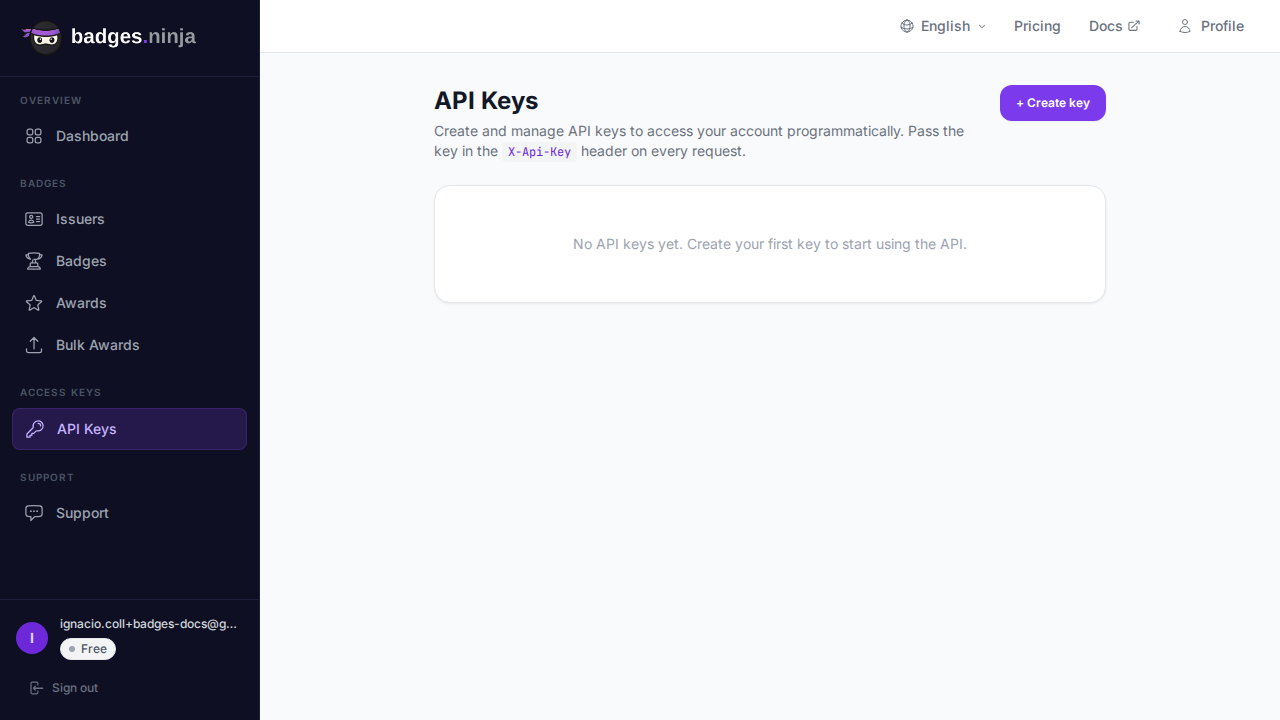
| API-first developer experience | Sparse docs, inconsistent responses | Clean REST API, predictable JSON, OpenAPI docs |
EU Hosting and Compliance Heritage
Open Badge Factory’s Finnish data centers and decade-long GDPR compliance track record remain unmatched. For organizations with strict data residency requirements or complex compliance frameworks, OBF’s European hosting provides regulatory peace of mind that newer platforms are still building.
The platform’s integration with European educational standards (ECTS, EQF) and its adoption by major universities like the University of Helsinki create network effects that matter for institutional credibility.
Institutional Trust and Longevity
When you’re issuing credentials that recipients will rely on for years, platform stability matters. OBF’s 10+ year track record and backing by established Finnish education technology companies provides institutional confidence that startup platforms cannot yet match.
For conservative organizations where “nobody got fired for choosing IBM” thinking prevails, OBF’s maturity and conservative feature development approach can be reassuring.
Advanced Workflow Complexity
OBF supports complex multi-stakeholder workflows that enterprise organizations often require. Multi-level approval processes, sophisticated user role management, and integration with enterprise identity providers remain more mature in OBF than in newer alternatives.
Where Modern Alternatives Excel
Visual Design Experience
This is where the generational gap becomes most apparent. OBF’s badge designer feels like software from 2015 because, essentially, it is. Limited templates, restrictive customization options, and a workflow that requires multiple screens for basic design tasks.
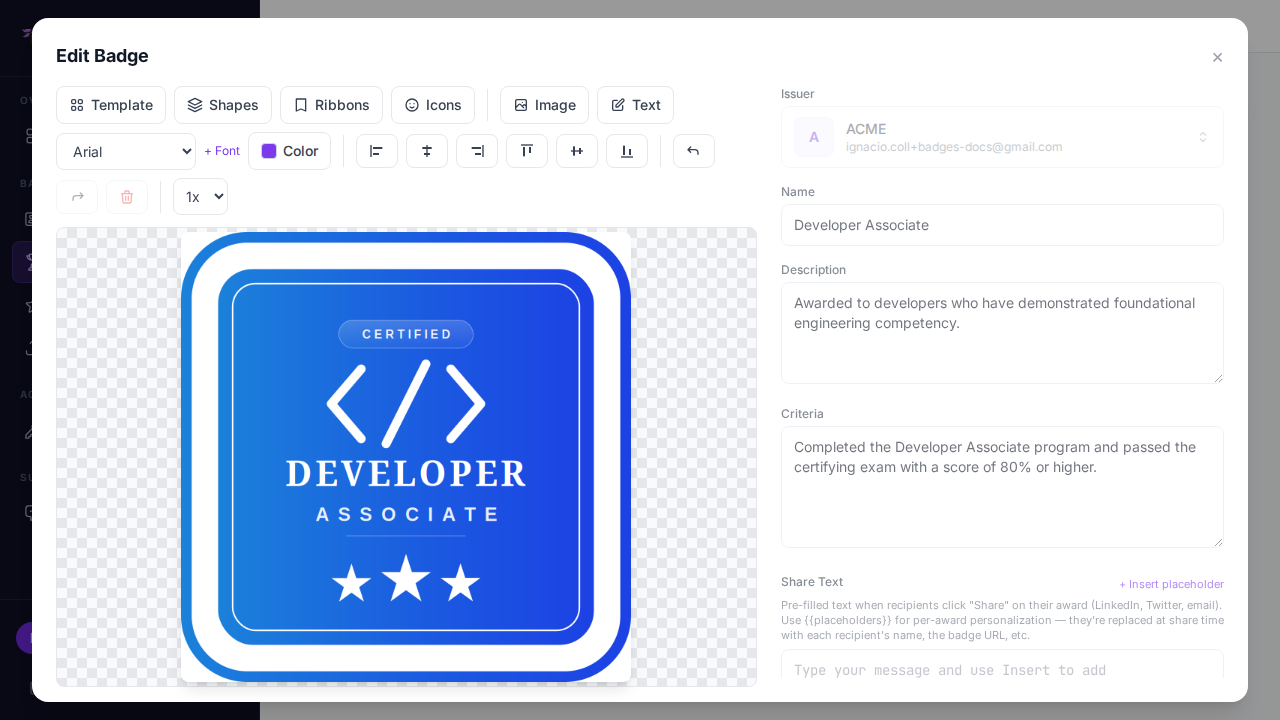
Modern platforms like Badges.Ninja offer visual designers with drag-and-drop simplicity, 80+ professional templates, real-time preview, and snap-to-grid alignment. The difference in user experience is immediately apparent to anyone designing their first badge.
API-First Developer Experience
OBF’s API documentation reads like it was written for a different era of web development. Sparse examples, inconsistent response formats, and authentication patterns that require significant developer investment to integrate cleanly.
Compare this JavaScript example for issuing a badge via Badges.Ninja:
const response = await fetch('https://api.badges.ninja/api/awards', {
  method: 'POST',
  headers: {
    'X-Api-Key': 'bws_1234567890abcdef1234567890abcdef',
    'Content-Type': 'application/json'
  },
  body: JSON.stringify({
    badgeId: 'badge_abc123',
    recipient: { name: 'Sarah Chen', email: 'sarah@example.com' },
    issuedOn: new Date().toISOString()
  })
});
const award = await response.json();
console.log(`Award URL: https://badges.ninja/awards/${award.awardId}`);
The same operation in OBF requires significantly more ceremony, custom authentication handling, and parsing of less predictable response structures. Full endpoint and auth details are in the API Authentication docs.
Mobile-First Recipient Experience
When recipients receive their credentials, they’re increasingly viewing them on mobile devices. OBF’s verification pages and recipient portal feel designed for desktop browsers from 2016.
Modern alternatives provide responsive verification pages, QR code sharing, and mobile-optimized experiences that feel native to how people actually consume digital content today.
Direct Feature Comparison
Core Credentialing Features
Both platforms deliver the essentials:
- Open Badge v2.0 compliance: Full JSON-LD output and interoperability
- Public verification: Tamper-proof credential verification
- Bulk issuance: CSV upload and API-driven batch processing
- PDF certificates: Professional printable formats
- LinkedIn integration: Direct “Add to Profile” functionality
Where They Diverge
Badge Design
- OBF: Template-based with limited customization
- Badges.Ninja: Visual designer with 80+ templates, custom backgrounds, 50+ icons
Recipient Portal
- OBF: Traditional web interface, password-based
- Badges.Ninja: Magic-link sign-in, mobile-optimized badge collection
Integration Options
- OBF: Enterprise SSO focus, complex multi-tenant setup
- Badges.Ninja: REST API focus, simple authentication patterns
Analytics and Reporting
- OBF: Detailed administrative reporting for institutional compliance
- Badges.Ninja: Real-time engagement metrics (views, shares, LinkedIn clicks)
Pricing Reality Check
OBF pricing requires contacting sales, which typically means enterprise-level commitments starting around €2,000-5,000 annually for meaningful usage. Hidden costs include setup fees, training sessions, and integration support.
Badges.Ninja’s transparent pricing starts at $0 for getting started, $9/month for regular issuance, and $29/month for high-volume programs. No setup fees, no training requirements, no sales calls required.
For smaller training providers or pilot programs, this pricing difference can be decisive. For large institutions with existing OBF contracts, the cost difference may be less significant than migration effort. See our full free-tier platform comparison for how Open Badge Factory’s pricing stacks up against every other major issuer.
The Developer Experience Gap
Modern APIs should feel intuitive to developers. Here’s the same badge creation operation in Python:
Badges.Ninja:
import requests
headers = {
    'X-Api-Key': 'bws_1234567890abcdef1234567890abcdef',
    'Content-Type': 'application/json'
}
badge_data = {
    'name': 'Advanced Python Certification',
    'description': 'Demonstrates advanced Python programming skills',
    'criteria': 'Complete the Advanced Python course with 85% or higher',
    'imageUrl': 'https://example.com/python-badge.png'
}
response = requests.post('https://api.badges.ninja/api/badges',
                        headers=headers, json=badge_data)
badge = response.json()
OBF equivalent: Multiple API calls, complex authentication setup, and significantly more boilerplate code for the same outcome.
For organizations building automated credentialing workflows, this developer experience difference compounds quickly.
When to Choose Each Platform
Choose Open Badge Factory if:
- EU data residency is mandatory: Regulatory requirements outweigh UX considerations
- Institutional credibility matters most: University partnerships and conservative stakeholders value OBF’s track record
- Complex workflows are required: Multi-level approvals and enterprise integration needs
- Budget includes enterprise support: You have dedicated IT resources and institutional relationships
Choose Badges.Ninja if:
- User experience matters: Design quality and recipient satisfaction are priorities
- Developer productivity is important: API integration and automation workflows are planned
- Transparent pricing is preferred: Predictable costs and no-commitment trial periods
- Modern features are valued: Mobile-first design and real-time analytics provide business value
Migration Considerations
Both platforms support Open Badge v2.0, making migration theoretically straightforward. Badges issued on either platform remain verifiable and portable.
Practical migration challenges include:
- Recipient communication: Updating stakeholders on new verification URLs
- Brand consistency: Redesigning badges to match existing visual standards
- Integration updates: Modifying existing API integrations
- Training requirements: Onboarding teams to new interfaces
Most organizations find migration easier from OBF to modern alternatives than the reverse, due to simpler authentication and more intuitive interfaces.
GDPR Compliance Reality
Despite common assumptions, platform choice doesn’t determine GDPR compliance—your credentialing practices do. Both OBF and Badges.Ninja provide GDPR-compliant infrastructure, but compliance depends on:
- Recipient consent processes: How you obtain permission to issue credentials
- Data retention policies: How long you store recipient information
- Sharing controls: How recipients control their credential visibility
Badges.Ninja’s SHA-256 email hashing and magic-link authentication actually provide stronger privacy-by-design practices than traditional password-based systems.
The European Context
For European training providers, the choice often comes down to risk tolerance versus operational efficiency. OBF provides maximum regulatory safety but at the cost of user experience and development velocity.
Organizations confident in their compliance processes often find modern alternatives deliver better outcomes for recipients and administrators while maintaining equivalent security and verifiability.
The trend among newer European certification bodies has been toward platforms that prioritize recipient experience while maintaining compliance standards.
Looking Forward
Both platforms will continue evolving, but their architectural differences suggest divergent paths. OBF’s enterprise focus and conservative development approach serve institutional customers well but limit innovation velocity.
Modern alternatives like Badges.Ninja can iterate faster on user experience and developer tools while maintaining the same core credentialing standards.
For most European training providers, the question isn’t whether OBF works—it does—but whether modern alternatives work better for your specific requirements and stakeholder expectations.
As digital credentialing becomes mainstream, recipient expectations for mobile-friendly, visually appealing credentials will likely favor platforms designed with modern user experience principles.
The Open Badge standard ensures your choice isn’t permanent. Credentials issued on any compliant platform remain portable and verifiable regardless of future platform decisions.
For organizations ready to prioritize recipient experience and development productivity while maintaining European compliance standards, exploring modern alternatives makes strategic sense.
Ready to issue your first verifiable credential? Start free at badges.ninja — visual designer, public verification page, PDF certificate, Open Badge v2.0 output. No credit card required.
About this article: This comparison was researched and drafted with AI assistance, then fact-checked and edited by the Badges Ninja team. Pricing and feature details reflect our understanding as of the publish date above — always confirm current terms directly with the vendor before making a purchasing decision.
Frequently asked questions
Does Open Badge Factory or Badges Ninja offer better EU GDPR compliance?
How much does Open Badge Factory cost compared to Badges Ninja?
Which platform has a better visual badge designer, Open Badge Factory or Badges Ninja?
When should I choose Open Badge Factory over Badges Ninja?
Can I migrate my existing badges from Open Badge Factory to Badges Ninja?
About the author
Nacho Coll
Founder & Engineer at Badges Ninja
Nacho founded Badges Ninja to make issuing verifiable digital credentials as simple as a single API call — Open Badge v2.0 badges and certificates, minted, hosted, and verifiable without standing up your own issuer infrastructure. Writes about the Open Badges spec, credential verification, and running a credentialing platform serverless on AWS, from the operator side of the wire.