How Universities Are Using Open Badges for Micro-Credentials
Universities issue micro-credentials for short courses, bootcamps, and competency milestones — Open Badges make them shareable and verifiable. Real-world rollout patterns.
 By Nacho Coll
 Nacho founded Badges Ninja to make issuing verifiable digital credentials as simple as a single API call — Open Badge v2.0 badges and certificates, minted, hosted, and verifiable without standing up your own issuer infrastructure.
A transcript is a good record of what a student sat through. It’s a poor record of what they can actually do. A three-week data visualization workshop, a one-credit lab-safety certification, a co-curricular leadership program — none of these fit naturally into a GPA line, and most never make it onto a resume in any form a recruiter can verify. That gap is why so many universities have spent the last few years building out micro-credential programs on top of Open Badges: small, specific, verifiable records of a single competency, issued the moment it’s demonstrated rather than buried in a semester-end transcript.
This isn’t a hypothetical trend. Registrar’s offices, continuing-education divisions, career centers, and individual departments are all issuing badges independently, often before there’s an institution-wide policy for it. That’s worth understanding on its own — the messy, bottom-up way most universities actually arrive at a micro-credential program — before getting into the technical and privacy details of doing it well.
Why Universities Are Moving Off PDFs and Transcripts
Three forces are pushing this, and they show up in roughly this order at most institutions.
Recruiter visibility. A skill buried in a transcript is invisible to a recruiter scanning LinkedIn. A badge sitting in someone’s Licenses & Certifications section, with a verification link a hiring manager can actually click, is not — a different, LinkedIn-native kind of visibility than the Skill Assessments LinkedIn already offers, since a badge carries the issuing university’s name and full credential metadata rather than a generic platform quiz score. Career services offices have noticed that students who share credentials get more inbound recruiter messages — and that’s a metric a career center can report to a dean in a way “we taught a workshop” never was.
Employer signaling for non-degree learning. Continuing-education divisions, professional development centers, and executive-education programs run huge volumes of short courses that were never designed to produce a degree — but the completions still need to mean something to an employer paying tuition reimbursement or evaluating a promotion case. A verifiable badge is a much cheaper way to prove that than a phone call to the registrar.
Alumni engagement. Every badge a graduate shares publicly carries the university’s name and logo back out into their professional network — for free, repeatedly, for years after they’ve left campus. Alumni relations offices that have started tracking this treat badge share-rate as a genuine (if informal) brand-reach metric.
None of these are why a university starts a badge program — usually it’s one department (often continuing ed or a coding bootcamp partnership) piloting something small. But they’re why the program tends to expand once it exists.
Implementation Patterns That Actually Work
The universities that get this right almost never try to badge everything at once. A few patterns recur across successful rollouts.
Start with one unambiguous unit: the course or the workshop
Don’t try to badge “critical thinking” as a competency on day one — it’s too fuzzy to verify and too hard to design criteria for. Start with something with a clear completion event: a specific short course, a specific workshop series, a specific certification exam. The badge’s criteria text should be something a skeptical outside verifier would accept at face value: “completed the 12-hour Introduction to R Programming workshop, spring 2026” is defensible. “Demonstrates strong analytical skills” is not.
LMS integration for the completion trigger
Most institutions already have the completion signal sitting in an LMS — Canvas, Moodle, Brightspace — as a grade, a quiz pass, or a module-complete event. The efficient pattern is a webhook or scheduled export from the LMS that calls the badge platform’s Awards API the moment a student crosses the completion threshold, rather than a manual end-of-term batch someone has to remember to run.
For programs that aren’t ready for a live integration, a CSV export from the LMS gradebook at the end of each cohort works just as well operationally — see issuing badges from a CSV for the full walkthrough, including how to handle a few hundred rows exported straight from a gradebook.
Stackable badges for programs with multiple checkpoints
A certificate program with four modules shouldn’t wait until module four to issue anything. Issue a badge per module, then a capstone “meta-badge” that references the four prerequisite badges once all are complete. This does two things: it gives students something to share immediately instead of waiting months, and it gives the program a much clearer view of where students are dropping off — a module-3 badge issuance rate well below module-2’s is a visible signal, not something you find out at the end of the term.
Post-course issuance, not pre-registration
Issue the badge when the competency is demonstrated, not when someone registers for the course. This sounds obvious but it’s the single most common mistake in early pilots — usually because it’s operationally easier to badge everyone who signs up than to badge only those who finish. A badge that verifies “registered for” instead of “completed” trains recipients (and employers) to stop trusting the badge within one cohort.
What a Student Actually Sees
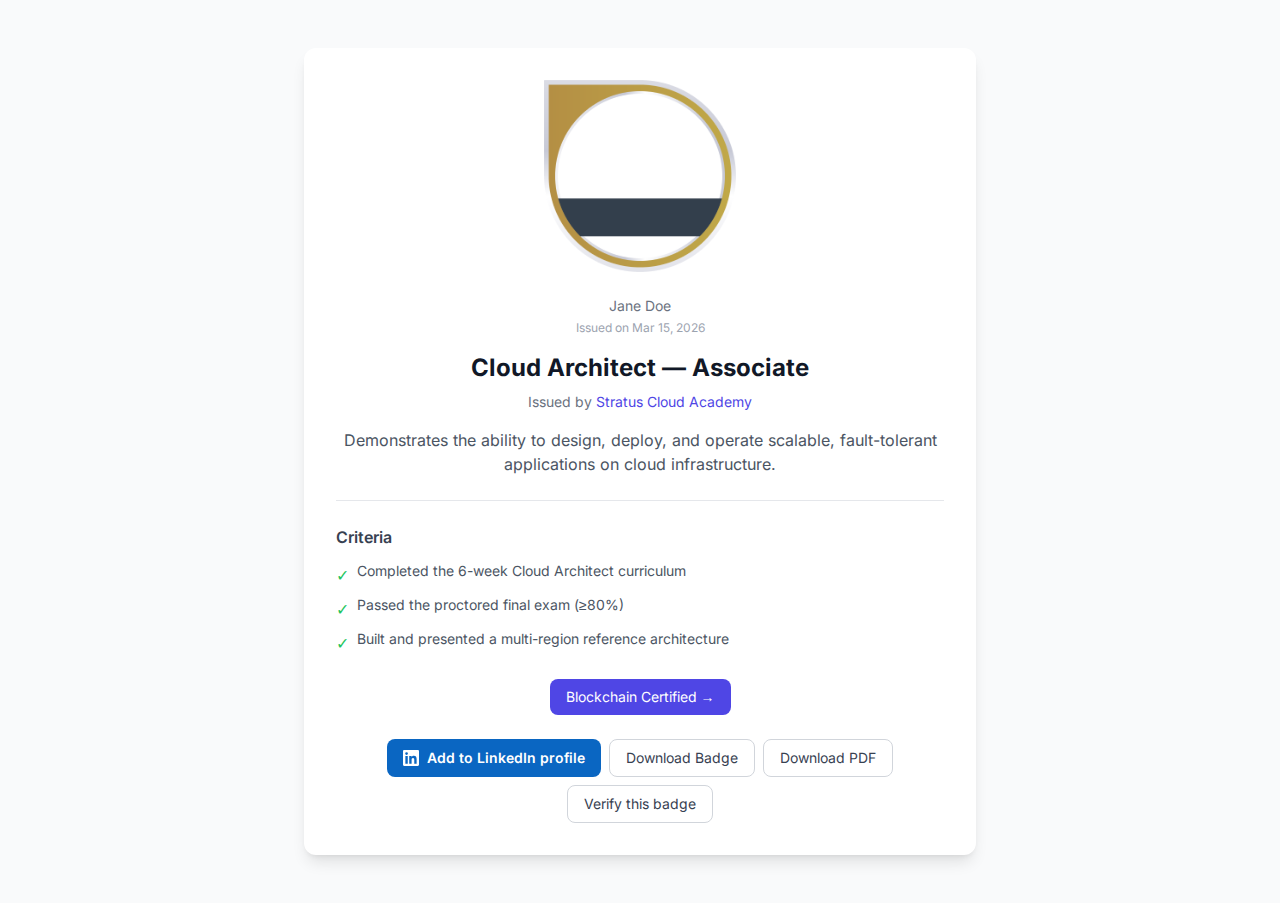
It’s worth walking through the recipient side of this once, because it’s the part that determines whether a micro-credential program gets adopted voluntarily or has to be mandated. When a badge is issued, the student gets an email with a link — no new account to create, no password to set up. Clicking it opens a magic-link sign-in: enter the email the badge was issued to, get a one-time link, land straight in a personal portal at badges.ninja/me showing every badge they’ve earned across every issuer, not just this one university.
From there the student can add the badge to their LinkedIn profile in one click (if the issuer has set a LinkedIn organization ID), download an A4 PDF certificate suitable for a physical portfolio or a printed application packet, or share the public verification link directly — a URL anyone can open, no login required, that shows the badge, the criteria, the issuing date, and a cryptographic verification chain back to the issuer. None of this requires the university to build or maintain a portal of its own; it’s the same recipient experience whether the badge came from a single department or a five-institution consortium.
That frictionless path matters more than it might seem. A credential that requires a new password to retrieve gets retrieved once and then forgotten. A credential that shows up as a link in an email a student can act on in thirty seconds gets shared while the achievement is still fresh — which is exactly the window where the recruiter-visibility and alumni-engagement benefits actually compound.
Where Micro-Credentials Fit Alongside the Degree
The universities running the most durable programs treat badges as a complement to the degree record, not a replacement for it, and they’re explicit about that boundary with faculty and students. A badge isn’t trying to be a transcript line — it’s trying to be the shareable, machine-verifiable artifact that a transcript was never designed to be. That framing avoids two failure modes seen in early, poorly-scoped pilots: registrar pushback over perceived encroachment on the official academic record, and faculty skepticism that badges are “grade inflation with extra steps.”
The programs that avoid both usually draw the line the same way: the registrar and SIS remain the system of record for anything that affects degree conferral or academic standing, and badges cover everything below that threshold — workshops, non-credit certificates, co-curricular achievements, skill demonstrations inside a for-credit course, professional development. That’s also, not coincidentally, exactly the category of learning that was previously undocumented anywhere a student could later prove it happened.
Privacy Considerations: Why This Is FERPA-Compatible
Any time “university” and “records students can share externally” appear in the same sentence, FERPA is the first question a registrar’s office asks. The short version: Open Badges are built around a model that’s already compatible with FERPA’s core requirement — that education records aren’t disclosed without the student’s consent.
- The recipient controls disclosure. A badge lives on the recipient’s own portal and profile, not on a university-hosted page a third party can browse without permission. Sharing it — to LinkedIn, in an email, on a resume — is an action the student takes deliberately, which is functionally a consented disclosure, not an institutional one.
- The recipient’s email is never stored in plaintext on the credential. It’s hashed with a per-credential salt as part of the Open Badge v2.0 assertion, following the spec’s
hashedrecipient identity format. A verifier can confirm a specific email matches the credential; they can’t harvest a directory of student emails from a badge or a batch of badges. - The criteria and evidence are scoped to what’s being certified, not a broader academic record. A badge for “completed Introduction to R Programming” discloses exactly that fact and nothing else about the student’s transcript, GPA, or other coursework.
- Revocation is available if a badge is issued in error or needs to be withdrawn, without touching the rest of the recipient’s credential history.
Most FERPA-conscious institutions still route the decision through their registrar or general counsel before a first pilot, which is the right call — but the technical model (recipient-controlled sharing, hashed identity, scoped disclosure) is designed to make that conversation short rather than a blocker.
Setting Up an Issuer Profile for Your Institution
On https://badges.ninja, an issuer is verified automatically when the signup email matches the issuer’s domain — a .edu email registering an issuer for that university is auto-verified with no manual review step, which matters when a pilot needs to launch before the next term rather than after a procurement cycle. See the issuer guide for the full setup, including how to set your institution’s LinkedIn organization ID once so every badge award renders an Add-to-LinkedIn-Profile button for recipients.
Departments running independent pilots (a bootcamp partnership, a continuing-ed division, a single lab) can each register their own issuer under the same institutional umbrella, or a central office can hold the issuer and let departments design their own badge templates within it — most universities start with the former (departmental autonomy for a pilot) and centralize later once there’s a track record to point to.
A Realistic Rollout Timeline
For a department starting from zero, a workable sequence looks like this:
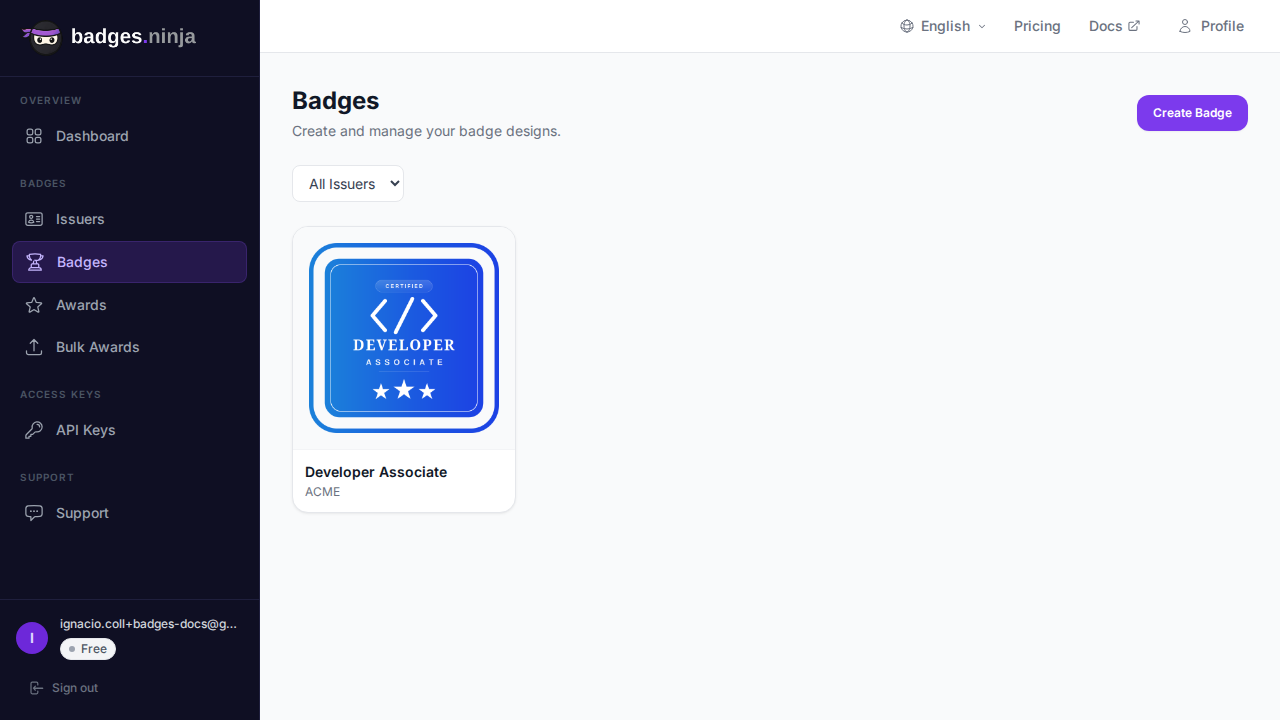
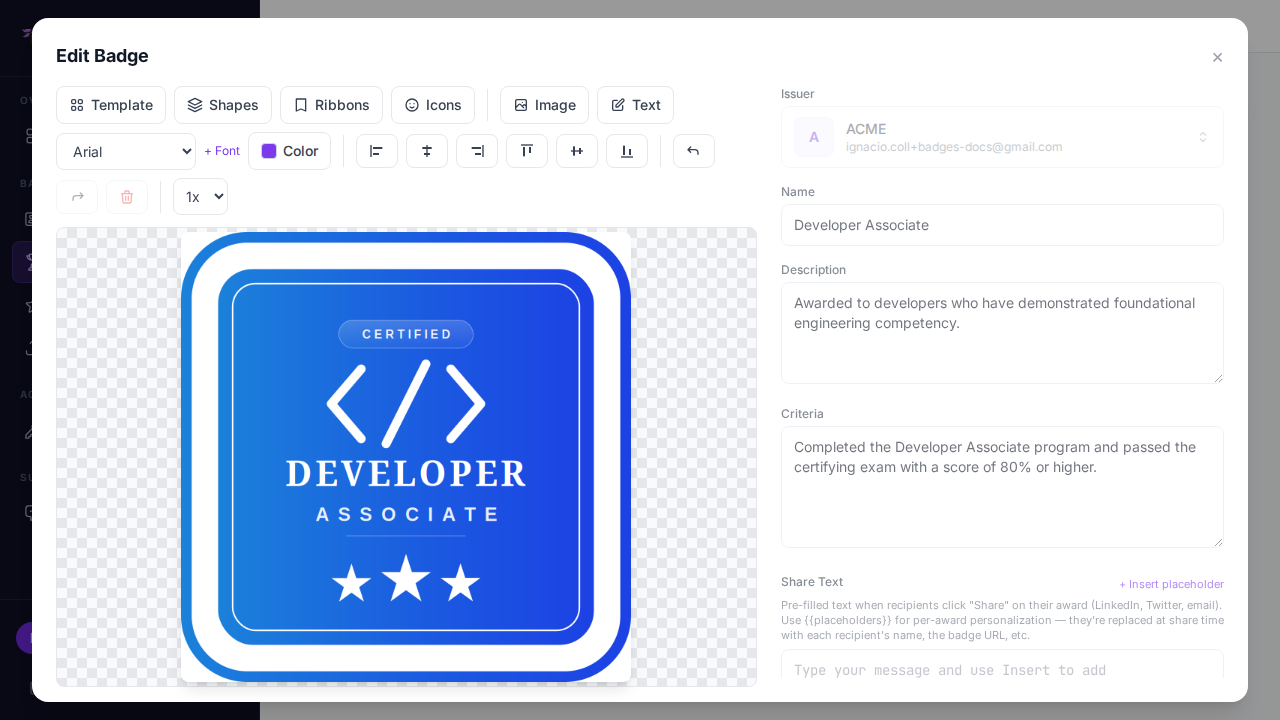
- Pick one course or workshop with a clear completion event and design one badge for it in the visual designer — no design skills required, and templates exist for course, achievement, and completion badge types.
- Wire up issuance — either a CSV export from the LMS gradebook per cohort, or an API call from an LMS webhook if the volume justifies the integration work.
- Run one cohort and watch the share rate. This is the number that tells you whether students actually value the credential enough to put it in front of their network.
- Expand to stackable badges if the pilot course is part of a larger certificate or program structure.
- Bring in the registrar or continuing-ed office to formalize the FERPA review and issuer governance once the pilot has real usage data to show, not before.
The universities that stall out are almost always the ones that tried to get institution-wide sign-off before running a single pilot. The ones that succeed run the pilot first and use the share-rate and recipient feedback as the case for expansion.
Ready to issue your first verifiable credential? Start free at badges.ninja — visual designer, public verification page, PDF certificate, Open Badge v2.0 output. No credit card required.
Related reading: Free digital badge & certificate maker → · Badges Ninja plans & pricing · Credly alternative · Certifier alternative · Cheapest Open Badges platform · Best Open Badges platforms (ranked)
About the author
Nacho Coll
Founder & Engineer at Badges Ninja
Nacho founded Badges Ninja to make issuing verifiable digital credentials as simple as a single API call — Open Badge v2.0 badges and certificates, minted, hosted, and verifiable without standing up your own issuer infrastructure. Writes about the Open Badges spec, credential verification, and running a credentialing platform serverless on AWS, from the operator side of the wire.